The Psychology Behind Decision-Making: Why We Do What We Do
Human decisions are driven by patterns, biases, and emotional triggers—understanding them is the key to better outcomes in communication, business, and everyday life.

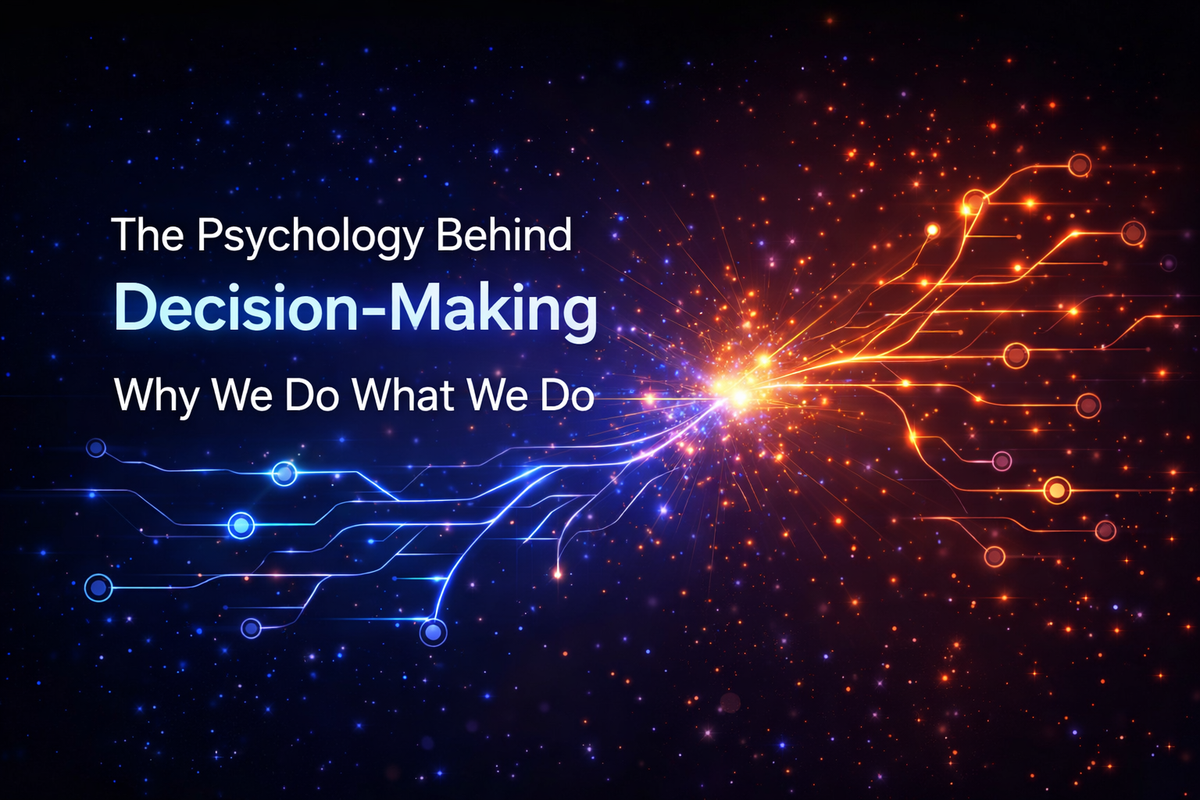
Decisions Are Not as Rational as We Think
We like to believe that our decisions are logical.
That we evaluate options, weigh pros and cons, and choose the best outcome.
But in reality:
Most decisions are driven by subconscious patterns, not conscious logic.
Behavioral psychology studies these patterns—how people actually think, feel, and act.
What is Behavioral Psychology?
Behavioral psychology is the study of how human behavior is influenced by:
- cognitive biases
- emotional triggers
- social dynamics
- past experiences
It focuses less on what people say and more on:
what people actually do—and why
The Hidden Drivers of Behavior
Every decision is influenced by a combination of factors, often without us realizing it.
1. Cognitive Biases
Mental shortcuts that simplify decision-making
Examples:
- Confirmation bias → seeking information that supports existing beliefs
- Loss aversion → avoiding losses more than pursuing gains
2. Emotional Triggers
Emotions often override logic
- urgency
- fear
- attraction
- curiosity
These can dramatically influence outcomes in seconds.
3. Social Influence
People look to others for guidance
- social proof
- authority
- group behavior
This is why trends, reviews, and popularity matter.
4. Context and Timing
The same decision can change depending on:
- timing
- environment
- current mindset
A message sent at the wrong time can fail—regardless of its quality.
Why This Matters in Real Life
Understanding behavioral psychology improves outcomes across:
Communication
Why some messages get responses—and others don’t
Business
Why customers take action (or don’t)
Relationships
Why connection is built—or lost
Markets
Why people buy, sell, panic, or wait
The Gap Between Knowledge and Action
Most people already have access to information.
But they still struggle with:
- timing
- execution
- influence
- consistency
Because:
Knowing what to do is not the same as knowing what works.
Turning Behavior Into Better Decisions
When you understand behavior, you can:
- anticipate responses
- reduce friction
- increase engagement
- improve decision outcomes
This is where behavioral insights become powerful—not just as theory, but as application.
From Psychology to Decision Intelligence
Behavioral psychology is the foundation.
But on its own, it requires interpretation.
Modern systems are now beginning to translate behavioral insights into:
- structured guidance
- probability-based decisions
- real-time recommendations
This is the bridge between:
Understanding behavior → Acting on it effectively
Where This Is Being Applied
Behavior-driven systems are already being used in real-world scenarios:
❤️ HeartSpark
Improves communication using behavioral triggers
→ increases response and connection rates
📈 MarketSpark
Applies behavioral patterns to trading decisions
→ identifies higher-probability opportunities
The Takeaway
Behavior is the invisible layer behind every decision.
Those who understand it gain an advantage in:
- communication
- influence
- timing
- outcomes
As technology evolves, the real edge won’t come from more information…
It will come from:
understanding how people actually behave—and acting on it.
Continue Exploring Behavioral Intelligence
Want to go deeper into how behavior shapes decisions?
👉 What is BehaviorStack™?
👉 Explore AI & Decision Intelligence
Or see behavior-driven systems in action: