
Human-in-the-Loop vs Human-on-the-Loop: Choosing Oversight for AI Decisions
A practical framework for deciding when AI-supported actions need human approval, when supervision is sufficient, and when hybrid oversight fits.

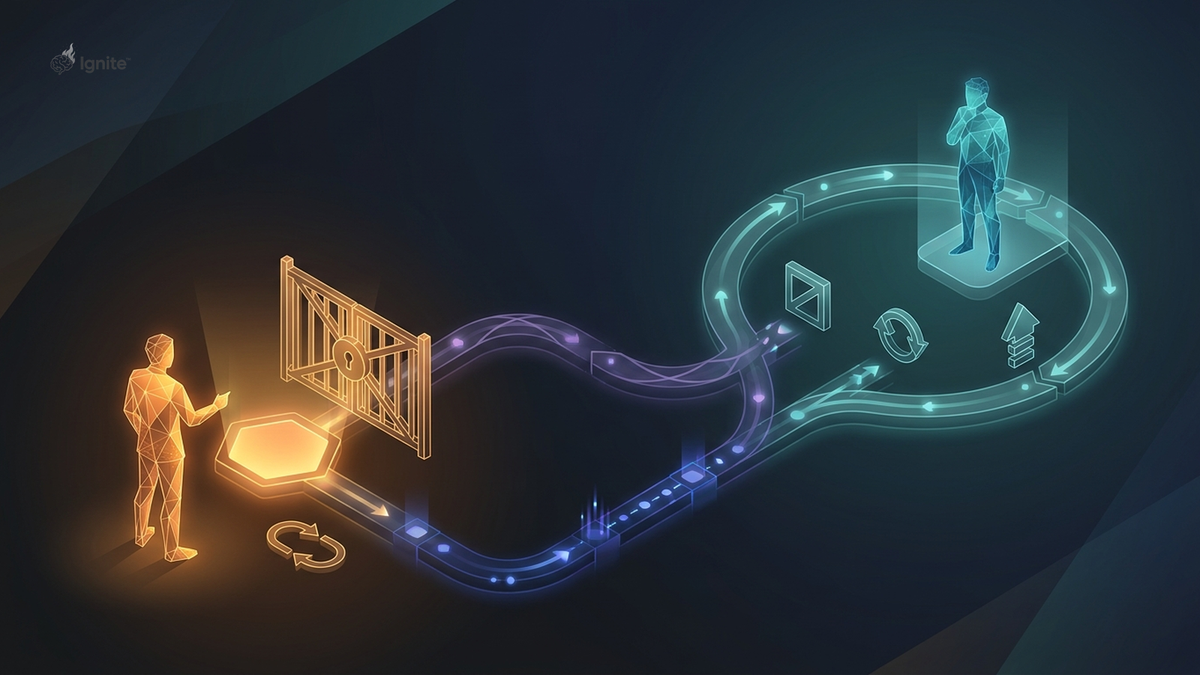
Human-in-the-loop oversight requires a person to review or approve a consequential decision before the system acts. Human-on-the-loop oversight allows the system to operate while a person monitors it and can intervene. Use pre-action approval when consequences are severe, errors are difficult to reverse, or context is ambiguous. Use supervision when actions are bounded, observable, reversible, and supported by tested intervention controls. When risk varies by case, use a hybrid model.
Putting a human somewhere in an AI workflow does not automatically create meaningful oversight. A reviewer may be present but unable to understand the recommendation, respond before harm occurs, or stop the action. Another team may require approval for every case yet overwhelm reviewers until approval becomes a rubber stamp.
The real design question is not simply whether a human is involved. It is where human judgment belongs, what information that person receives, how much time they have, and what authority they can exercise. The Ignite Platform™ decision-support architecture provides one useful context for separating structured inputs, system logic, selected AI tasks, safeguards, and human responsibility.
This comparison explains how human-in-the-loop and human-on-the-loop oversight differ, where each model fits, and how to choose a defensible approach for a specific AI-supported decision workflow.
Human Approval or Human Supervision: What Are You Choosing?
Human-in-the-loop and human-on-the-loop describe different positions for human control within an operating process.
In a human-in-the-loop model, a person reviews a recommendation, classification, or proposed action before a consequential step is completed. The system may organize information, generate an assessment, or suggest a response, but execution waits for approval. The human role is a case-level decision point.
In a human-on-the-loop model, the system operates within defined boundaries while a person supervises its behavior. The supervisor may receive alerts, review exceptions, pause operation, override an action, or trigger a fallback process. The human role is continuous or exception-based control rather than approval of every case.
Terminology can vary across domains, standards, and jurisdictions. The applicable definition should therefore be verified before it is used in a formal governance, legal, safety, or compliance document. Operationally, however, the distinction is clear: one model generally requires approval before action; the other permits action under supervision.
A third pattern often provides the most practical answer: hybrid oversight. Routine, low-risk cases may proceed under supervision, while uncertain, novel, or high-impact cases are routed to pre-action review. A hybrid model is not a compromise by default. It is a risk-tiered operating design that must be supported by reliable thresholds, escalation rules, and evidence that risky cases are not being missed.
This article focuses on AI-supported recommendations, prioritization, routing, approvals, and bounded automated actions. It does not determine whether a particular workflow satisfies a legal or regulatory requirement. That conclusion depends on the applicable domain, jurisdiction, system role, and facts.
The Criteria That Should Determine the Choice
Choosing an oversight model based only on a desire for more automation—or a general preference for human review—produces weak controls. The decision should be based on how failure occurs and whether a person can prevent, detect, or correct it.
Consequence severity
Start with the worst plausible result of an incorrect action. A minor, recoverable inconvenience is different from a decision that could materially affect safety, access, rights, finances, employment, health, or another consequential outcome. As severity increases, the justification for allowing action before review must become stronger.
Reversibility
Ask whether the action can be stopped, rolled back, corrected, or repaired before harm compounds. Reversibility is not simply the presence of an “undo” button. The organization must consider downstream effects, notifications, dependencies, reputational consequences, and the time required to restore the prior state.
Intervention window
Supervision works only when detection and response happen within a useful period. Compare four intervals: time to detect, time to alert, time for a person to understand the situation, and time to stop or correct the action. If their combined duration exceeds the time before harm occurs, human-on-the-loop supervision is not a meaningful control.
Error detectability
A supervisor cannot intervene in a failure that remains invisible. Teams need evidence that alerts, explanations, anomaly signals, and operational context can distinguish important exceptions from normal variation. Poor alert quality creates two risks: missed failures and alert fatigue.
Decision ambiguity
Some cases depend on missing context, conflicting signals, novel conditions, or judgment that cannot be reduced to stable rules. Those cases are stronger candidates for review before action. Supervisory operation is more defensible when normal behavior and exceptions are clearly bounded and have been tested.
Throughput and latency
Pre-action review consumes attention case by case. At high volume, queues can grow and reviewers may approve recommendations without meaningful scrutiny. Supervisory operation can preserve speed, but only if exceptions remain manageable. The relevant question is not which model is faster; it is whether the required human attention can be delivered reliably.
Reviewer competence and authority
A nominal reviewer is not necessarily an effective safeguard. The person must have adequate training, relevant context, enough time, and the authority to reject, pause, override, escalate, or require more evidence. If organizational incentives discourage intervention, formal authority may still be unusable in practice.
Auditability and accountability
The organization should be able to reconstruct what the system proposed, what information was available, what action occurred, whether a person intervened, and who remained accountable. Both oversight models need records, but the evidence differs: approval quality matters in human-in-the-loop workflows, while alert, response, override, and recovery evidence matters in human-on-the-loop workflows.
Operational maturity
Human-on-the-loop supervision depends heavily on stable monitoring, tested fallback behavior, incident response, and change control. A system that has not demonstrated those capabilities should remain under stronger pre-action review, especially for consequential workflows.
Human-in-the-Loop vs Human-on-the-Loop at a Glance
| Decision factor | Human-in-the-loop | Human-on-the-loop |
|---|---|---|
| Action timing | Consequential action waits for human review or approval | The system operates while a human supervises |
| Human role | Case-level reviewer or approver | Monitor, exception handler, or stop authority |
| Primary strength | Stronger pre-action control for consequential or ambiguous cases | Greater continuity and throughput when controls are mature |
| Primary risk | Delay, bottlenecks, fatigue, and rubber-stamping | Late detection, alert overload, weak intervention, and automation bias |
| Best fit | High-stakes, difficult-to-reverse, ambiguous, or exceptional decisions | High-volume, time-sensitive, observable, reversible, and bounded decisions |
| Required evidence | Reviewer context, capacity, competence, and approval quality | Detection quality, response time, stop authority, and fallback reliability |
The clearest distinction is about timing and control. Human-in-the-loop determines whether an action begins. Human-on-the-loop determines whether an operating process should continue.
Neither model is universally safer. Pre-action review can fail when reviewers lack context or capacity. Supervision can fail when detection is late or intervention is ineffective. Choose the least permissive model that can meet legitimate operational needs while preserving meaningful human control.
How Each Model Performs Under Real Operating Conditions
Stakes and reversibility
Human-in-the-loop oversight has the clearer advantage when an incorrect action could create severe or difficult-to-reverse consequences. Requiring informed approval creates an opportunity to examine context before execution and prevents the action from becoming the default simply because the system proposed it.
That advantage depends on review quality. If a person lacks information, has only seconds to decide, or routinely accepts the system recommendation, the approval gate may exist without adding meaningful protection.
Human-on-the-loop oversight is more defensible when actions are bounded, observable, and recoverable. The organization must be able to detect an exception and intervene before consequences spread. A reversible action with weak monitoring may be less controllable than a more complex action with precise alerts and a tested rollback path.
The practical test is simple: if a wrong action occurs, can the organization identify it, stop it, reverse it, and repair its effects within the available time? If not, approval should occur before action.
Speed, volume, and human capacity
Human-in-the-loop review introduces latency by design. That delay may be appropriate when additional scrutiny is worth more than speed. It becomes dangerous when volume exceeds capacity and cases accumulate or reviewers begin accepting defaults to clear the queue.
Human-on-the-loop supervision shifts attention from every case to exceptions, signals, or sampled reviews. This can support continuous operation, but it also creates dependence on alert precision. Too many low-value alerts overwhelm the supervisor; too few may conceal emerging failure.
Teams should measure both models rather than assume their effects. For pre-action review, measure case volume, review time, queue growth, overrides, and disagreement patterns. For supervision, measure alert precision, missed exceptions, response time, stop success, rollback time, and recovery quality.
If neither review capacity nor monitoring quality is adequate, changing labels will not solve the problem. The workflow itself must be redesigned.
Context, ambiguity, and novelty
Human-in-the-loop review is generally better suited to situations where relevant context is incomplete, conflicting, or difficult to encode. A person can request missing information, question assumptions, recognize an unusual circumstance, and decide that the proposed action should not proceed.
Human-on-the-loop supervision fits more naturally when operating boundaries are stable and exceptions can be identified reliably. It is weaker when novelty changes the meaning of normal signals or when the supervisor cannot see the context necessary to interpret an alert.
A mature design should not force every case into one model. Ambiguous cases can be routed to pre-action review, while routine cases remain under supervision. The routing logic itself must be tested against edge cases, drift, and conditions that were not well represented during design.
Authority, intervention, and accountability
Both models can create the appearance of control without the substance of control.
In a human-in-the-loop process, the reviewer may technically approve the action but have little ability to challenge the recommendation. Time pressure, automation bias, incomplete explanations, or unclear ownership can turn approval into confirmation.
In a human-on-the-loop process, a supervisor may see the problem but lack a usable stop control, sufficient response time, or authority to interrupt operations. A dashboard is not an intervention mechanism. An alert is not a safeguard unless someone can act on it.
Meaningful oversight requires an accountable person who can understand the situation, change the outcome, and document the decision. Test those capabilities through representative cases, timed drills, and audit samples rather than relying on role descriptions alone.
Strengths, Limitations, and Failure Modes of Each Model
Human-in-the-loop strengths
- Prevents consequential action until a person has reviewed the case.
- Supports judgment when context is ambiguous, incomplete, or novel.
- Makes case-level approval responsibility explicit.
- Creates a natural point for requesting more evidence or escalating uncertainty.
- Can limit exposure while a system or process is still maturing.
Human-in-the-loop limitations
- Adds latency and operating cost.
- Can create bottlenecks when case volume exceeds review capacity.
- May produce inconsistent decisions across reviewers.
- Can encourage automation bias when people routinely accept system recommendations.
- May provide false assurance when reviewers lack time, context, competence, or authority.
Human-on-the-loop strengths
- Supports continuous operation where per-case approval is impractical.
- Focuses human attention on exceptions rather than every routine case.
- Can fit high-volume, time-sensitive workflows with bounded and reversible actions.
- Allows intervention when monitoring and stop controls are effective.
- Can support graduated escalation instead of a single approval gate.
Human-on-the-loop limitations
- Depends on rapid and reliable error detection.
- Can overwhelm supervisors with noisy or poorly prioritized alerts.
- May allow consequences to begin before a person understands the failure.
- Can become symbolic when intervention rights or fallback procedures are weak.
- Is vulnerable to automation bias, monitoring fatigue, drift, and untested edge cases.
These tradeoffs should not be treated as symmetrical in every situation. When plausible harm is severe, difficult to reverse, or impossible to detect before it compounds, human-on-the-loop supervision is not an equivalent alternative to pre-action approval.
Which Oversight Model Fits Your AI Decision?
| Scenario | Best fit | Why | Important exception |
|---|---|---|---|
| High-consequence action with limited reversibility | Human-in-the-loop | The action should wait for informed approval | Consider supervision only after strong domain review and demonstrated controls |
| High-volume, bounded, reversible action with reliable alerts | Human-on-the-loop | Continuous operation may be necessary and recovery is feasible | Escalate uncertain, anomalous, or high-impact cases |
| Mixed-risk workflow | Hybrid | Routine cases can proceed while riskier cases require approval | Thresholds must be tested for missed cases and drift |
| Novel or context-heavy case | Human-in-the-loop | A person can add context before action | AI may assist analysis without bypassing the approval boundary |
| Mature process with tested monitoring and rapid rollback | Human-on-the-loop | Supervision may provide effective control | Material system changes should trigger renewed testing or temporary stronger review |
The scenario label alone is not enough. Two workflows in the same industry may require different models because their consequences, reversibility, response times, and available evidence differ.
A high-volume workflow does not automatically justify supervision. If the system cannot detect harmful exceptions reliably, scale increases the exposure. Likewise, a high-stakes workflow does not become well controlled merely because a person approves every case. The review must be informed and operationally sustainable.
Hybrid oversight is often the most defensible choice when risk varies meaningfully. Examples include routing cases above an uncertainty threshold to review, requiring approval for specific consequence categories, sampling routine outcomes for quality checks, or reverting to pre-action review after drift, incidents, or material changes. Each threshold and trigger needs an accountable owner and periodic validation.
A Risk-Tiered Framework for Choosing Human Oversight
Use the following sequence for one real workflow rather than selecting an oversight model in the abstract.
- Define the action. Specify what the system recommends or does, when that action takes effect, and who or what is affected.
- Describe the worst plausible failure. Consider severity, scale, affected parties, and downstream consequences.
- Test reversibility. Determine whether the action can be stopped, rolled back, repaired, or compensated—and how long each step takes.
- Measure the intervention window. Compare time to detection, alerting, interpretation, response, and effective intervention.
- Evaluate reviewer information. Confirm that the person receives relevant evidence, context, uncertainty, and a usable explanation.
- Confirm authority. Verify that the person can reject, stop, override, escalate, or invoke fallback behavior without organizational friction.
- Model human capacity. Estimate volume, review time, alert load, queue growth, fatigue, and coverage during absence or peak demand.
- Define evidence and ownership. Record approvals, alerts, interventions, overrides, outcomes, incidents, and the person accountable for follow-up.
- Run representative tests. Include routine cases, edge cases, ambiguous inputs, failures, drift, and timed intervention exercises.
- Set reassessment triggers. Reevaluate the model after material changes, incidents, control failures, or evidence that assumptions no longer hold.
Apply these decision rules:
- If plausible harm is severe and the action is difficult to reverse, require human-in-the-loop approval.
- If an exception cannot be detected reliably within the response window, do not rely on human-on-the-loop supervision.
- If routine cases are bounded and reversible but exceptions are consequential, use hybrid risk-tiered routing.
- If review volume exceeds human capacity, redesign the workflow rather than accepting superficial approval.
- If monitoring, stop controls, rollback, or fallback behavior has not been tested, retain stronger pre-action review.
Several conditions should disqualify a proposed model until corrected: no accountable owner, insufficient reviewer context, no practical stop or override authority, no response-time capacity, undefined escalation, no rollback or fallback path, missing audit evidence, or untested edge cases.
A structured platform review can help expose those gaps. Use the guidance on how to evaluate a decision intelligence platform before trusting it to examine evidence, explanations, human authority, governance, representative testing, and ongoing monitoring.
Document the result as a decision record: selected model, scope, assumptions, evidence, disqualifiers, responsible owner, unresolved risks, and conditions that require a change. Avoid a fabricated numerical score. The goal is a defensible operating choice, not false precision.
Choose Control Based on Consequence—not Automation Ambition
When uncertainty is material and the cost of acting wrongly is high or difficult to reverse, human-in-the-loop review is the stronger default. It prevents a consequential action from proceeding until an accountable person has considered the case.
Human-on-the-loop supervision becomes defensible when the operating boundaries are clear, actions are observable and recoverable, exceptions can be detected quickly, and supervisors have enough time, context, and authority to intervene. These are capabilities to demonstrate, not assumptions to declare.
When risk varies by case, use a hybrid model. Allow bounded routine cases to proceed under supervision while routing uncertain, novel, or high-impact cases to pre-action review. Revert to stronger review when monitoring degrades, the system changes materially, or evidence no longer supports the original operating assumptions.
No universal threshold applies across domains. Terminology, legal obligations, acceptable residual risk, and evidence requirements should be verified for the applicable context.
The most useful next step is to select one workflow and map its control path: what triggers review, what the person sees, how long they have, what they can stop or reverse, and what evidence remains. Then review Ignite Platform’s decision-intelligence architecture to compare that policy with a concrete separation of inputs, product rules, selected AI tasks, safeguards, and human responsibility.
Key Takeaway
Meaningful human oversight is not defined by where a person appears in a process diagram. It is defined by whether that person can understand the situation, act within the available time, change the outcome, and remain accountable for the decision.
Continue Exploring
Explore the Ignite Platform™ hub for the broader decision-support model, then continue to Ignite Platform’s decision-intelligence architecture for a closer look at how system functions and human responsibility can be separated.
Frequently Asked Questions
What is the difference between human-in-the-loop and human-on-the-loop?
Human-in-the-loop generally requires a person to review or approve a consequential decision before the system acts. Human-on-the-loop generally allows the system to operate while a person supervises, receives alerts, and can intervene. Definitions may vary by domain or standard, so formal usage should be verified for the applicable context.
Is human-in-the-loop always safer?
No. Pre-action approval can still fail when reviewers lack context, time, competence, or authority, or when volume causes fatigue and rubber-stamping. It is the stronger default for severe, difficult-to-reverse, or ambiguous decisions, but its effectiveness depends on review quality and capacity.
When is human-on-the-loop appropriate?
It is most appropriate when actions are bounded, observable, and reversible; exceptions can be detected quickly; and supervisors have tested stop, override, escalation, and fallback controls. If detection or intervention cannot occur before harm compounds, supervision is not sufficient.
Can a workflow use both models?
Yes. A hybrid model can allow routine, lower-risk cases to proceed under supervision while routing uncertain, anomalous, or high-impact cases to pre-action approval. The routing thresholds, escalation rules, and missed-case risk must be tested and monitored.