Why Emotions Drive Most Decisions (Not Logic)
Emotional decision making influences most human behavior—understanding emotional patterns can help improve awareness, timing, and decision quality.

Why Does Emotional Decision Making Happen?
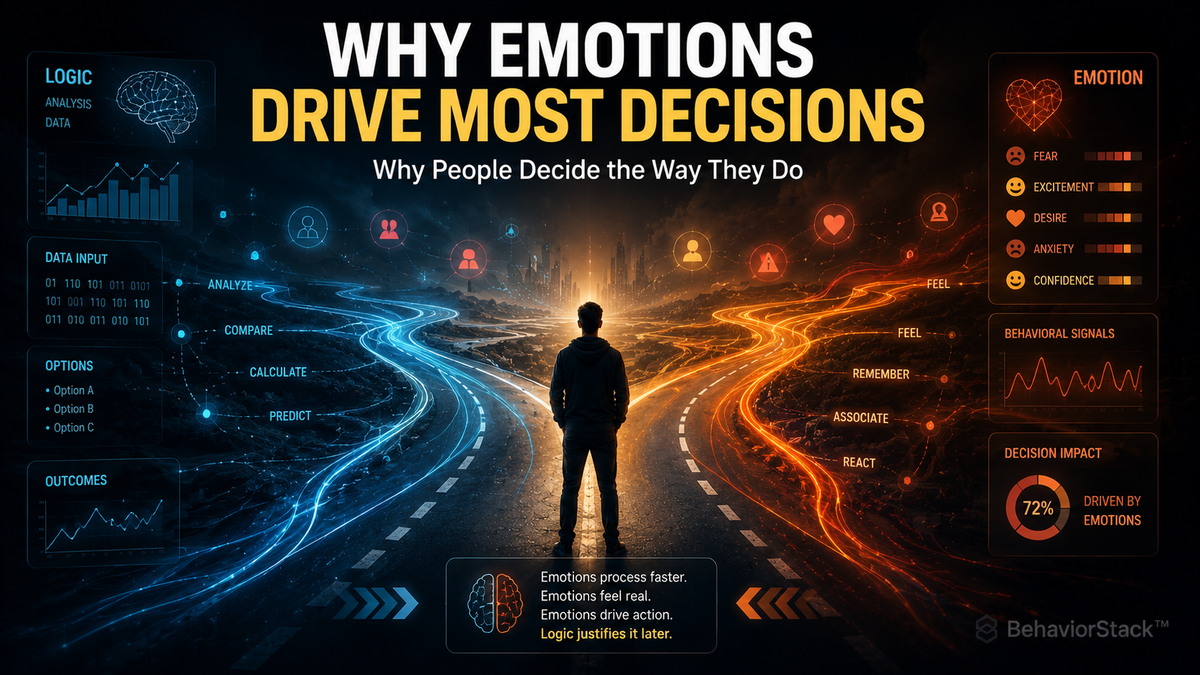
Emotional decision making happens because the brain processes feelings, risk, and survival signals faster than logical analysis—causing people to react emotionally before thinking rationally.
Most people believe they make decisions logically.
But in reality…
Emotion influences far more decisions than people realize.
Whether it’s:
- relationships
- communication
- purchases
- career choices
- risk-taking
People often decide emotionally first…
…and justify those decisions logically afterward.
That’s how emotional decision making works.
What Is Emotional Decision Making?
Emotional decision making occurs when feelings influence choices more than objective analysis or structured reasoning.
This doesn’t mean emotions are bad.
Emotions help humans:
- recognize threats
- evaluate rewards
- respond quickly under uncertainty
The problem happens when emotional reactions override awareness and context.
Why Emotional Decision Making Matters
Emotion affects:
- confidence
- timing
- perception
- urgency
- risk evaluation
This leads to:
- impulsive actions
- regret-based decisions
- inconsistent behavior
Most people think they are responding to facts.
But often they are reacting to:
- fear
- excitement
- anxiety
- pressure
- social influence
Common Mistakes People Make
Most people:
- confuse emotion with certainty
- react impulsively under pressure
- ignore behavioral patterns in their own decisions
This creates a cycle where:
Emotion → reaction → regret → repetition
Without awareness, the same patterns continue repeating.
How to Improve Emotional Decision Making
Instead of reacting, focus on:
- Awareness
- Patterns
- Intent
Ask yourself:
- What emotion am I feeling right now?
- Is this urgency real or emotional?
- Am I reacting or deciding intentionally?
This is where systems like BehaviorStack™ begin to matter.
They help introduce structure and awareness into emotionally-driven decisions.
Old Way vs. Better Way
Old Way
React → Guess → Repeat
Better Way
Observe → Understand → Decide
Real-World Examples
Instead of:
- making decisions while emotional
- reacting immediately under pressure
You can:
- pause before acting
- evaluate context more clearly
Result:
- better decision quality
- reduced regret
- more consistent outcomes
Why This Gives You an Edge
Most people act on:
Emotion
Better results come from:
Awareness + structure
When you recognize emotional patterns, you stop reacting automatically…
…and start making more intentional decisions.
Related Topics and Next Steps
Continue exploring:
👉 Learn more in: What Is BehaviorStack™? The Framework Behind Smarter Decisions
👉 Read next: What Is FOMO in Decision Making?
👉 Explore: Why People Make Bad Decisions (And How to Fix It)