What Is FOMO in Decision Making?
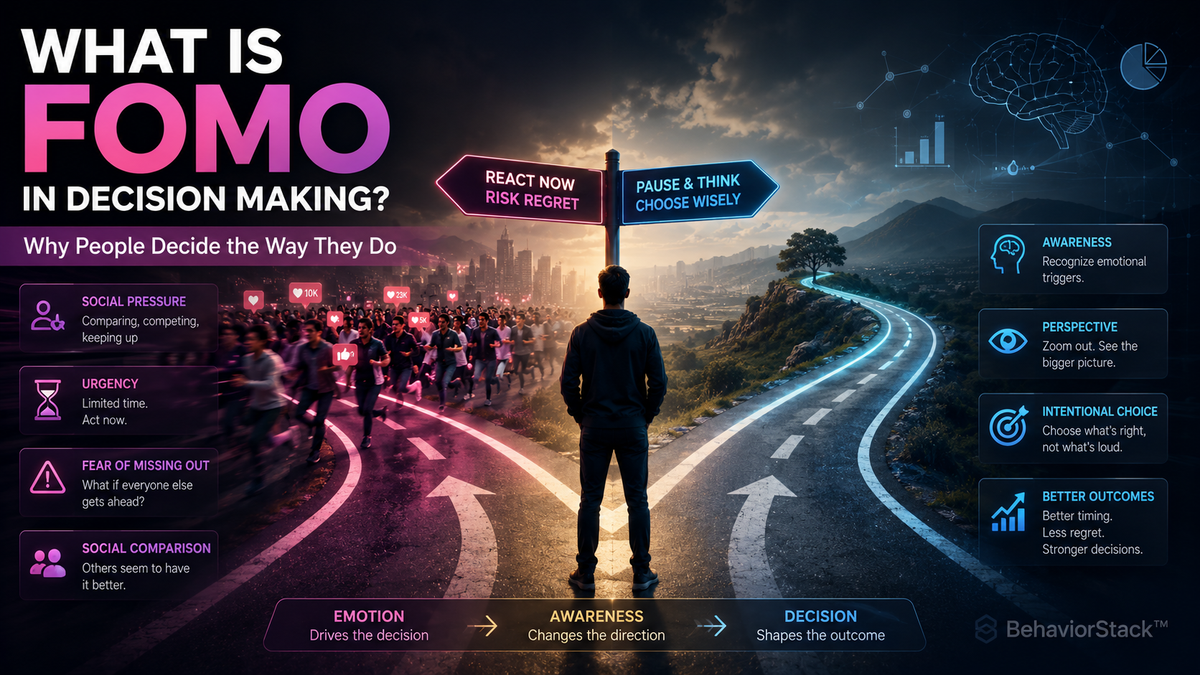
FOMO psychology influences decision-making by triggering emotional reactions based on fear of missing opportunities, social pressure, and urgency.

What Is FOMO Psychology?
FOMO psychology refers to the fear of missing out on opportunities, experiences, or outcomes—and it often causes people to make emotional decisions instead of rational ones.
Most people have experienced it.
You see others moving faster.
Buying something.
Taking action.
Getting attention.
Suddenly…
You feel pressure to act immediately.
Not because you carefully evaluated the situation—
But because you fear being left behind.
That’s FOMO.
What Is FOMO in Decision Making?
FOMO stands for:
Fear Of Missing Out
In decision-making, it happens when emotion and urgency override thoughtful analysis.
FOMO is often triggered by:
- Social comparison
- Scarcity
- Momentum
- Fear of regret
The brain interprets “missing out” as a threat.
So people react quickly—even when the decision may not be right.
Why FOMO Psychology Matters
FOMO influences decisions more than most people realize.
It can affect:
- Relationships
- Purchases
- Communication
- Career decisions
- Financial choices
This leads to:
- Impulsive behavior
- Poor timing
- Emotional reactions
Most people think they are acting logically…
When they are actually reacting emotionally.
Common Mistakes People Make
Most people:
- Rush decisions because others are acting
- Confuse urgency with opportunity
- Ignore context and long-term outcomes
FOMO creates pressure to act fast.
But speed without awareness often leads to regret.
How to Improve FOMO Decision-Making
Instead of reacting, focus on:
- Awareness
- Patterns
- Intent
Ask yourself:
- Am I acting because it’s right?
or - Am I acting because I fear missing out?
This is where systems like BehaviorStack™ begin to matter. They help introduce structure into emotionally driven decisions by replacing impulsive reactions with a more disciplined decision process. See how MarketSpark™ applies BehaviorStack™ to financial decision-making to reduce emotionally driven trading decisions and improve decision quality.
For the market-specific version of this pattern, see FOMO in Trading: Is It Good or Bad—and What Exactly Is It?.
Old Way vs. Better Way
Old Way
React → Guess → Repeat
Better Way
Observe → Understand → Decide
Real-World Examples
Instead of:
- Following the crowd automatically
- Making rushed emotional decisions
You can:
- Pause and evaluate context
- Make decisions with greater awareness
Result:
- Better timing
- More consistent outcomes
- Reduced emotional regret
Why This Gives You an Edge
Most people act on:
Emotion
Better decisions come from:
Awareness + structure
When you recognize FOMO, you stop reacting impulsively…
…and start making more intentional decisions.
Related Topics and Next Steps
Continue exploring:
👉 Learn more in: What Is BehaviorStack™? The Framework Behind Smarter Decisions
👉 Read next: Why People Make Bad Decisions (And How to Fix It)
👉 Explore: What Is a Decision Intelligence System? And Why AI Alone Isn’t Enough