
Decision Science
Context Collapse: Why Good Decisions Fail in the Wrong Environment
Learn how context collapse decisions lead to poor judgment and discover how recognizing environmental influences can improve decision quality.
Decision Science
Learn how context collapse decisions lead to poor judgment and discover how recognizing environmental influences can improve decision quality.
Decision Science
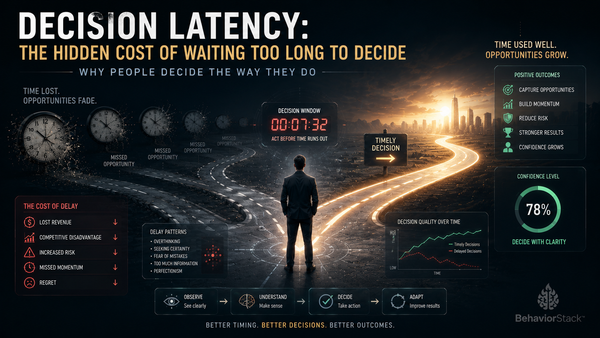
Decision latency is the hidden delay between recognizing a decision and taking action. Learn how reducing decision latency improves confidence, productivity, and long-term outcomes.
Decision Science
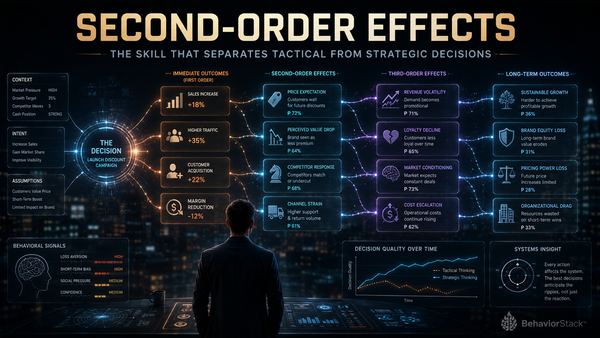
Second-order effects help decision-makers think beyond immediate outcomes to anticipate long-term consequences. Learn why this framework improves strategic thinking in business, AI, leadership, and everyday decisions.
Decision Science
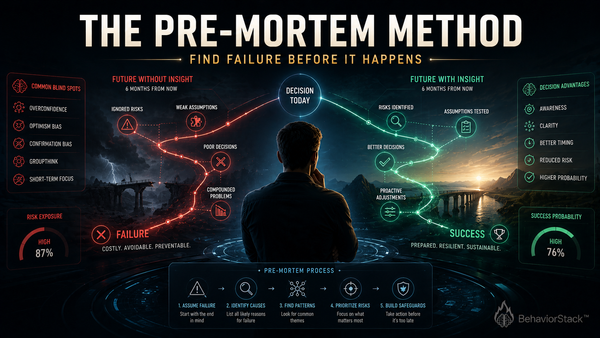
Pre mortem analysis helps identify hidden risks before decisions are made, improving outcomes and reducing avoidable mistakes.
Decision Science
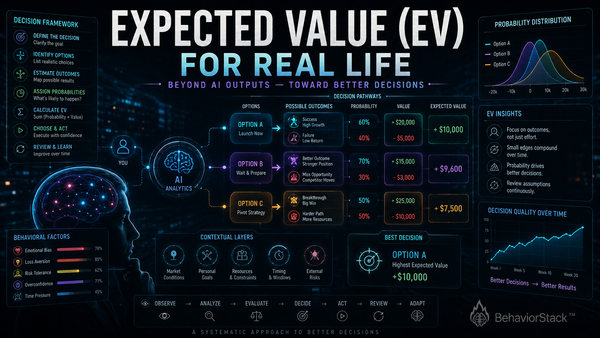
Expected value decision making is the fastest way to improve decision quality under uncertainty — especially when you pair probability with behavioral context and timing.
Decision Science
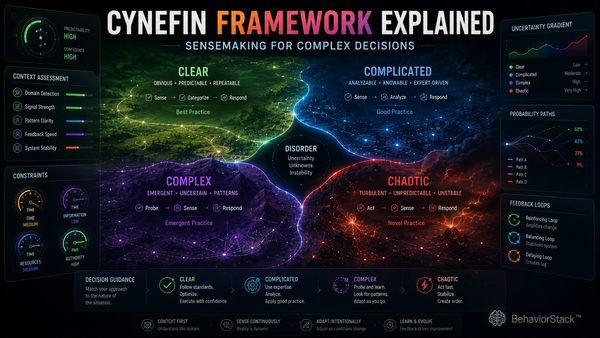
Cynefin is a sensemaking model that helps you choose the right decision mode—best practice, expert analysis, experimentation, or rapid stabilization—based on whether your situation is clear, complicated, complex, or chaotic.
Decision Science
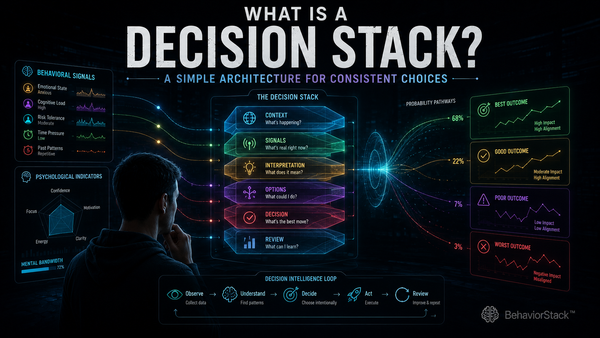
A decision stack is a simple architecture for consistent choices: signals → context → behavior → probability → decision → feedback. It’s the missing framework for better outcomes in life, business, and AI systems.
Decision Science
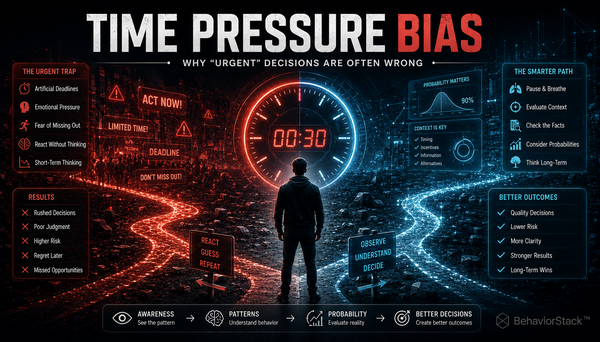
Time pressure bias causes people to mistake urgency for importance, leading to rushed decisions and poor outcomes. Learn how to recognize and avoid it.
Decision Science
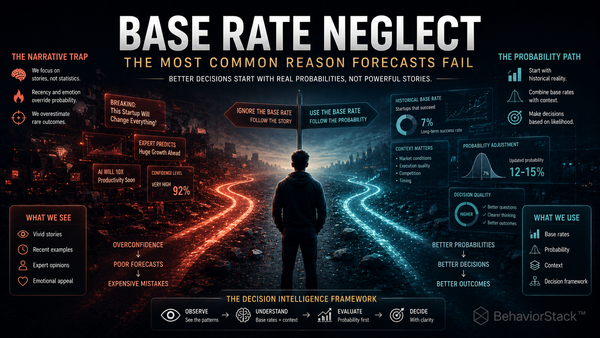
Base rate neglect causes people to ignore historical probabilities, leading to poor forecasts and weaker decisions. Learn why probability matters more than confidence.